
.png)
WHY IT MATTERS
A timetable that doesn't match real passenger demand costs you every day.
-
Schedules that no longer match real demand
-
Vehicles running underutilized
-
No visibility before committing to a change
-
Emissions and cost targets left on the table
01
Analyze demand across the network
Cermoni uses available mobility data — smart card transactions, passenger counts, route information, and occupancy estimations — to map how demand behaves across different routes, directions, and time periods.
02
Identify where the timetable doesn't match reality
The system identifies where and when passenger demand increases or decreases, then evaluates how the existing timetable can be improved to better reflect those patterns.
03
Redesign departure times, headways, and frequencies
Based on these insights, service can be restructured to reduce low-occupancy trips and strengthen coverage where and when demand is actually high.
HOW IT WORKS
From raw ridership data to a running timetable
.png)
KEY CAPABILITIES
Everything you need to plan smarter
.png)
.png)
Understand city-wide demand behavior
See how demand behaves across your entire network
Cermoni shows how passenger demand shifts across different routes, regions, directions, and time periods. You can see which lines need attention, where capacity problems are likely to occur, and where service can be reduced — before operational planning begins.
Identifies which lines require attention before scheduling starts
Shows where capacity problems may occur across routes and directions
Highlights where unnecessary service can be reduced without affecting passengers
Create or optimize timetables
Build a new timetable or improve the one you have
Cermoni can generate a timetable from scratch or optimize an existing one based on real demand patterns. Agencies can choose to fully redesign their service structure or make targeted improvements to specific parts of their operation.
Generate a timetable from scratch based on actual ridership data
Improve an existing timetable with data-backed adjustments
Flexible enough to fit a full network redesign or a focused intervention
.png)
.png)
.png)
.png)
.png)
.png)
Build and compare service scenarios
Compare options before committing to one
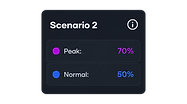
Cermoni lets you create multiple timetable scenarios by defining target occupancy levels for peak and off-peak periods. Each scenario represents a different balance between cost efficiency and service quality — so decision-makers can evaluate the trade-offs and choose what fits their priorities.
Define different occupancy targets for peak and off-peak periods
Every scenario assess balance between cost and service quality
Compare scenarios against operational priorities and budget constraints before deciding